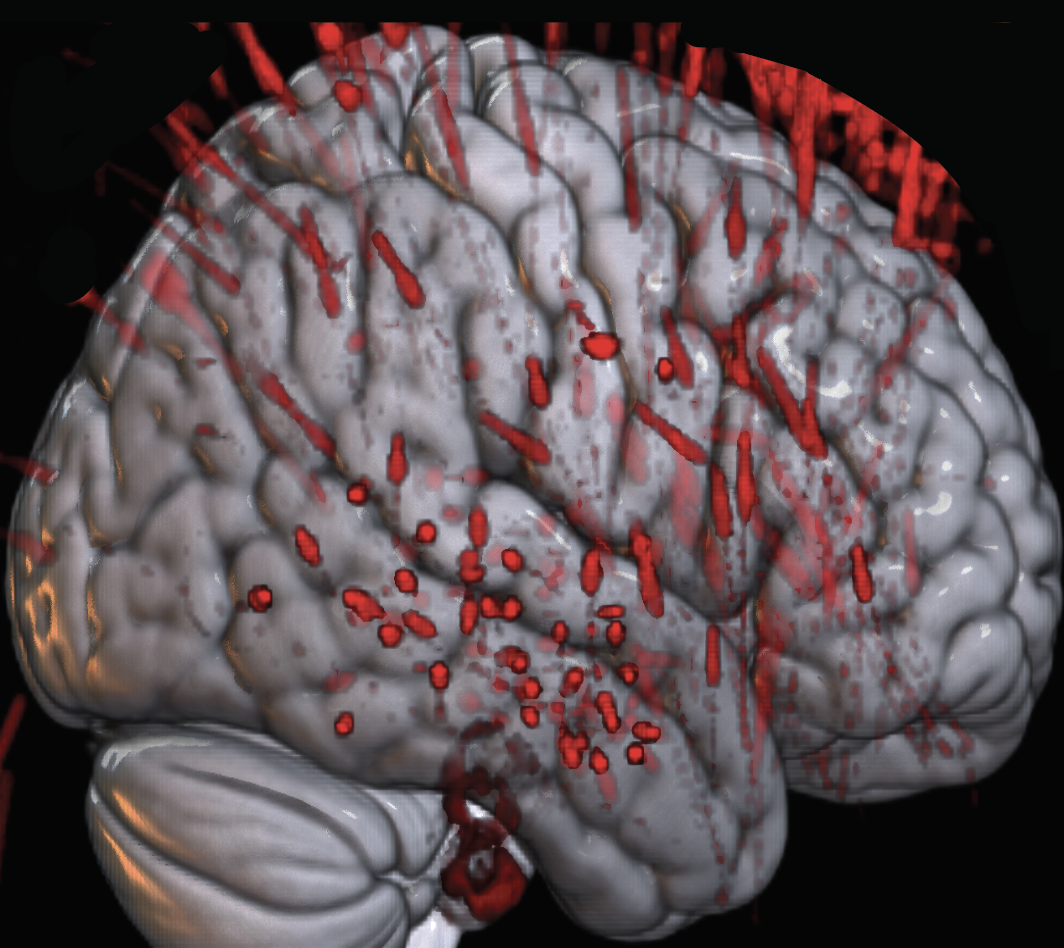
Cognitive Neuroscience and Neuromodulation Lab
Welcome to the Bentley Lab!
Our mission is to develop therapies for diseases affecting cognitive networks in the brain, including cognitive decline and mental illness, by understanding brain dynamics and neural activity. We do this by studying selective attention cognitive control processes, toward an ultimate goal of using neuromodulation (patterned stimulation) to restore physiologic function.
We analyze neural populations and network dynamics during cognitive tasks measuring attention, inhibitory control, and cognitive control.
Our findings help us understand how brain networks support healthy cognitive processes and how pathologic networks lead to clinical illnesses such as depression, attention disorders, and cognitive impairment. We take this information from “bench-to-bedside”, developing restorative therapies for neurologic and psychiatric diseases.
Current Research
Understanding cognitive control networks
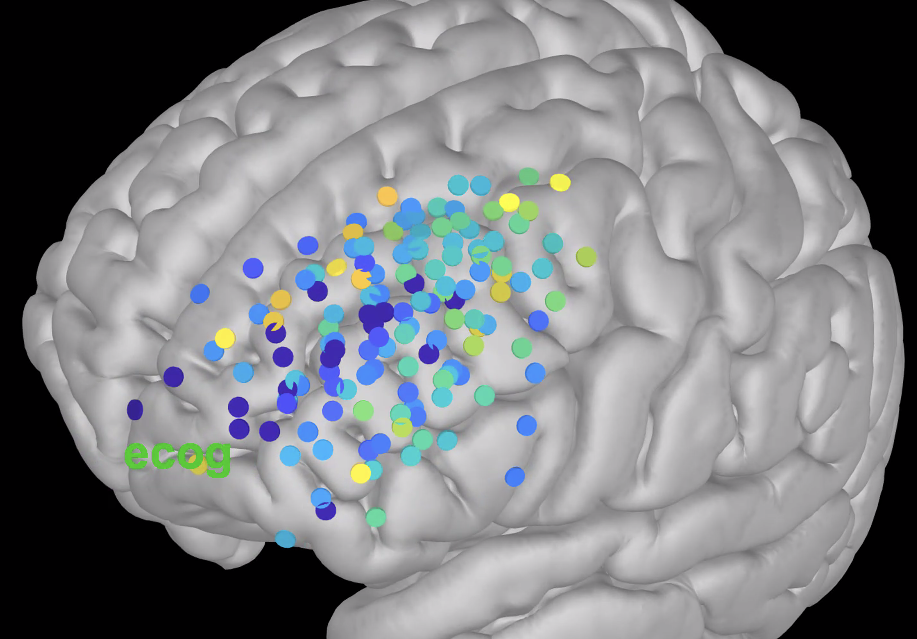
We learn how dorsolateral prefrontal cortex (DLPFC) interacts with parietal cortex as part of the frontoparietal network to support cognitive control, allowing us to hold information ‘in mind’ without becoming distracted. We also measure how this cortical networks talks to subcortical structures in the basal ganglia structures, analyzing intracranial recordings in patients undergoing deep brain stimulation.
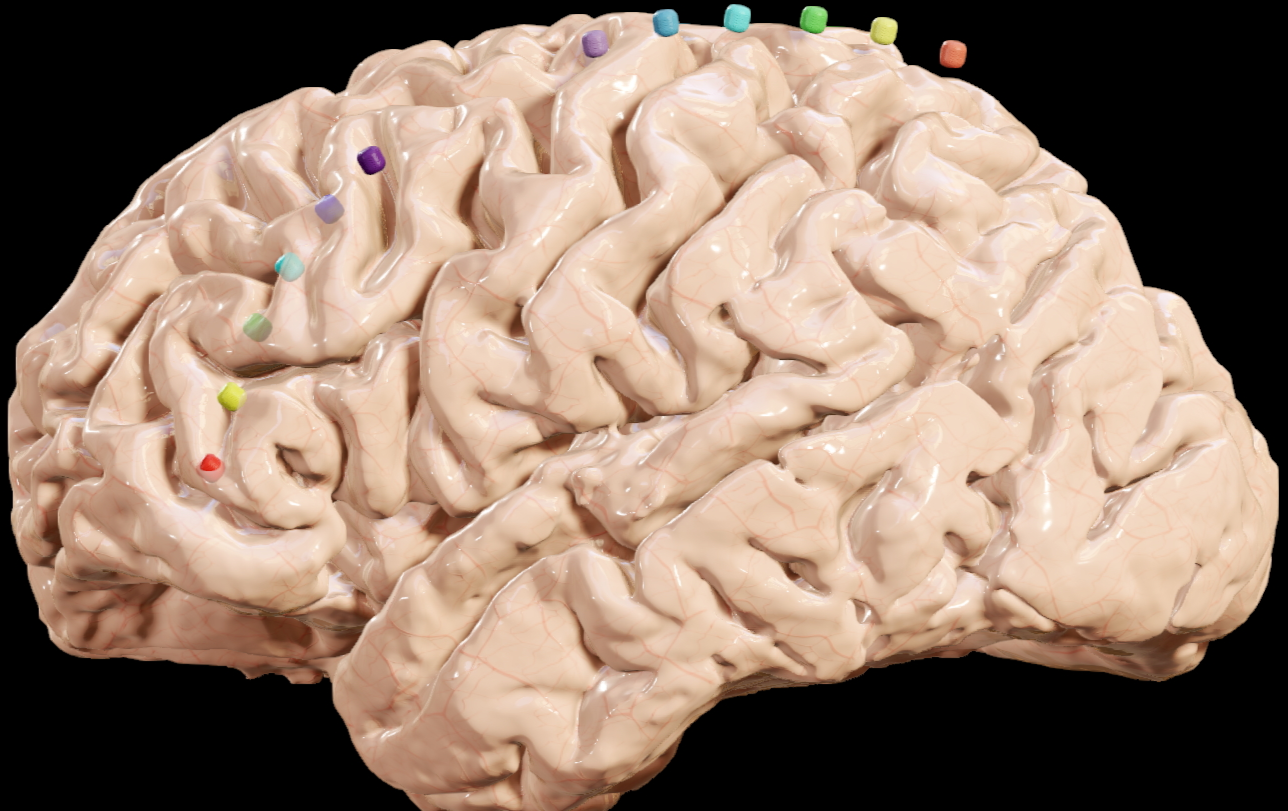
Understanding selective attention
Attention and cognitive control are closely related, and both contribute to a person’s capacity to interact rationally with the environment. Using multiple distributed implanted electrodes, we study how different areas in the brain work together to support cognitive control functions, such as attention and processing.
Cortical stimulation for cognitive impairment
We study a type of patterned stimulation (intermittent theta-burst stimulation) to determine its usefulness for diseases such as attention disorders, cognitive impairment, and depression. This stimulation is currently FDA-approved for non-invasive use in patients with major depression, and is useful for improving mood disorders as well. Our goal is to understand how neuromodulation affects brain dynamics, which will enable development of invasive or non-invasive neuromodulation.